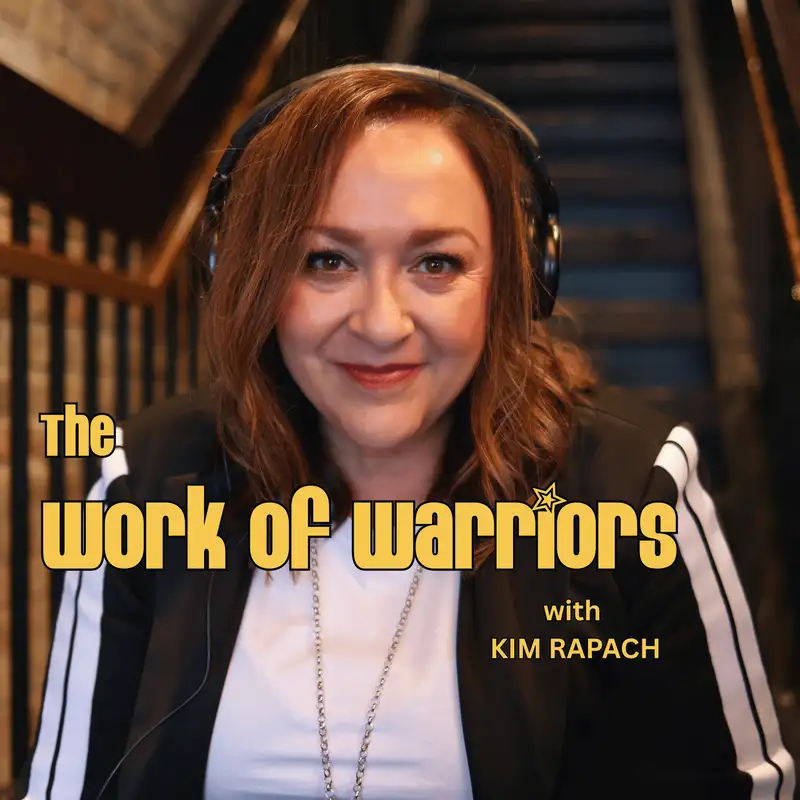
The Song That Saved Your Life, with Al Andrews
Kim Rapach (00:00.098)
Hello everyone, thank you. Hello everyone, thanks for being here, welcome back. Today we are focusing specifically on the music industry. You know when you meet someone and you can just feel that this person is special, I mean special. They say only a few words and you feel like you're home.
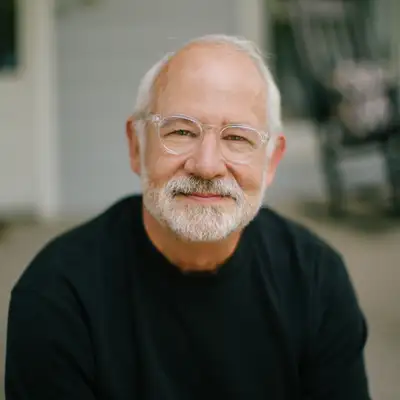
That's how I feel with today's guest. Today's guest is Al Andrews, the founder of Porter's Call. Porter's Call is a nonprofit organization in Nashville, Tennessee. If you're not familiar with it, it is a place where artists can find support and encouragement specifically attuned to their unique profession.
Kim Rapach (00:53.73)
It's a safe and confidential refuge where they can deal with their issues and the stresses they're facing.
Kim Rapach (01:07.052)
It's a safe and confidential refuge where artists can deal with their issues and stresses that they're facing, not only in their careers, but in their personal lives.
Kim Rapach (01:23.938)
All of the services provided through Porter's Call are provided at no charge. I found Porter's Call...
Kim Rapach (02:14.7)
Hello everyone and welcome back. Thank you for being here. You know when you meet someone and immediately you can feel their energy.
Kim Rapach (02:56.802)
I'm so excited to introduce to you today's guest, Al Andrews.
Al Andrews (03:09.367)
Yes. Hello. Let's see here. Can you hear me?
Kim Rapach (03:11.542)
Hi.
I can. I can see you. I can hear you. I'm so excited to see you. You look fabulous. Hi, Nita.
Al Andrews (03:21.971)
Nina's right here. She was she's my tech tech supervisor to be sure to be sure I got on which is always nervous for me. Alright, she's leaving now. Great to see you. Yeah.
Kim Rapach (03:35.282)
Well, here's the beautiful thing. Here's the beautiful thing. This isn't live. And so whatever happens, we just cut it out.
Al Andrews (03:40.439)
Oh, that's great. Oh, listen, I'm excited about talking with you. But I was going to ask you if it was live, so that's somewhat of always a relief to me. Yeah.
Kim Rapach (03:51.522)
Same, same, I know I can do these podcasts back to back all day long. And I'm like, fine, but going on a live and I'm like, I start to shiver. Why do I think that?
Al Andrews (03:59.639)
Well, I've been on a few of those and I go, oh, this is the time I'm going to just say something just awful by accident. You know, I'm going to use, I'm going to say, oh, it was faith ill. Oh, I mean, no. So yeah. Yeah.
Kim Rapach (04:12.928)
Right?
Whoops. Well, the good thing about like if you're talking like an Instagram live, I'm going to see if I can switch to my I'm going turn my Wi Fi off so that I'm connected to my cable. So if I lose you just hop back on. I shouldn't. But here we go.
Al Andrews (04:34.135)
Okay. Okay.
Kim Rapach (04:38.21)
Okay, we should be fine. Okay, fabulous. The live, like on Instagram, you can still go back and delete it. It's harder to edit, but you can delete it. It's terrible. But I'm like, well, for the, you know, for, for me, the three people who are watching, but I would have done them for people who have like, you know, thousands of people on the call. I don't know. I guess you just get used to it.
Al Andrews (04:38.421)
We're still here. We're still here.
Al Andrews (04:48.587)
Oh, yes.
Al Andrews (04:58.069)
Yeah.
Al Andrews (05:02.971)
I don't know. I don't know. So who does watch this?
Kim Rapach (05:09.378)
So who watches this? I mean, I don't know. I can't see who they are. It's a podcast. It's on YouTube.
Al Andrews (05:14.679)
I didn't know if it was kind of a, I didn't know if there was a certain demographic that finds you or former clients or both or what.
Kim Rapach (05:28.29)
Yeah, both. You know, my hope is artists either who have struggled with their mental health or who are still struggling, that's what it's devoted to, is artists who are still suffering in silence, but also young artists who can hear these messages from seasoned artists, seasoned professionals, who if we can help them.
Al Andrews (05:29.599)
Yeah.
Al Andrews (05:48.725)
Yeah.
Kim Rapach (05:56.596)
debunk this idea that fame and fortune are what bring us happiness before they, before their career takes off. That's ideal.
Al Andrews (06:02.679)
Gosh, yeah.
Al Andrews (06:06.839)
Recently, I've been preaching the gospel of it's okay to be middle class as an artist, you know? Did I tell you that I'm teaching a course at Belmont coming up this fall? Well, it may be part of what we talked about, but they invited me, they just said, you know, all the music programs out there do what we do. They help people.
Kim Rapach (06:15.394)
Yes.
Kim Rapach (06:19.65)
No, no, tell me.
Al Andrews (06:32.951)
with performance, they help people with staging, they help people with learning about the industry, and then they graduate from being their artist. But nobody's doing anything directly with artists in schools about their mental health. And so they said, we want to change that. And they asked me to come up with a little pilot course for juniors and seniors who have decided they're going to be an artist. And so I...
It's an hour credit, so it's eight classes for two hours each. And I'm calling it prehab. So I'm calling it prehab. In other words, things to do. It's really what you're doing, but things to do to prepare for the journey ahead and some practices, some pitfalls to avoid.
Kim Rapach (07:12.866)
Say that again, what are you calling it?
Kim Rapach (07:17.698)
Love that!
Al Andrews (07:29.015)
Uh, some things you need to think about in your own life so that you don't have to go to rehab or be on TMZ. So anyway, very excited about it. Yeah.
Kim Rapach (07:35.17)
Yeah, yeah, I love that. Prehab, oh my gosh, that's amazing. Do you think of that by yourself?
Al Andrews (07:42.743)
I did not. A friend of mine and I later a little group of young artists a few years ago and we were joking around calling it prehab. So yeah. So I thought I'm going to just. Yeah. Well, great. I'll just follow your lead here and we'll just have a fun time.
Kim Rapach (07:54.146)
See, it was meant to follow you and it was meant to come forward. Awesome.
Kim Rapach (08:03.37)
All right, well, sounds good. I just, I already did your very brief introduction. And so I'll just say welcome, hi, and then we'll just jump in and I'll start asking you some questions. I don't have anything, I don't, I mean, I have questions I like to ask, but I don't have anything like specifically we have to cover. I'd rather it just be, you know, how it always is, just chatting and.
Al Andrews (08:10.583)
Okay.
Al Andrews (08:25.591)
Okay.
Al Andrews (08:30.071)
Yeah, we'll just pretend like we're at breakfast. I know.
Kim Rapach (08:33.57)
Yeah, exactly. Oh my gosh, I missed that breakfast. I was thinking about it this morning. And the vanilla, I think it's the vanilla cake. It's not okay how often I think about that cake.
Al Andrews (08:42.231)
Oh my gosh. Yeah.
Al Andrews (08:47.959)
Thank you.
Kim Rapach (08:48.93)
Like randomly I have the bullet and I'm like, I don't want cake because unless it's that blonde cake at Thistle Farms, I don't need it.
Al Andrews (08:56.055)
Oh gosh, and then there's a strawberry one too, but anyway. Yeah. Yeah.
Kim Rapach (08:59.338)
Oh my goodness. All right. Okay. So welcome to the work of warriors. Al, I'm so excited that you're here. Thank you for being here.
Al Andrews (09:02.817)
Okay.
Al Andrews (09:08.887)
And it's so great to be here. Thanks for inviting me.
Kim Rapach (09:12.182)
Absolutely. So I just introduced our listeners to you very briefly as the founder of Porter's Call. And I know if you well, let me start that over. If you. How do I want? I'm kind of thinking, do I want to go retirement first or Porter's Call? I introduced you as the founder of Porter's Call, but I know that you have recently retired from that role.
Al Andrews (09:35.575)
Mm -hmm.
Al Andrews (09:40.343)
or getting close to it, officially it's in May. But, you know.
Kim Rapach (09:40.45)
So I think it's, oh, officially it's in May. Okay, I thought it was already official. Okay. Well, I just wanted to, okay. I just wanted to check on you first. I just wanted to ask you about your heart and how that's going. And then I think we can go backwards and you can tell our listeners more about Porter's call, but how are you?
Al Andrews (09:46.967)
Yeah, it's on the... Yeah.
Al Andrews (10:01.271)
You know, that's a great question. I start by going, I'm a little off balance just because this is something I've been doing for 23 years. And as I began to, in the last months, began to pull away, we've had about a four year transition plan. And as I began to pull away and the new leadership,
comes into place, which makes me so happy that it's going to continue beyond me after 23 years. And yet, as I move into this new space, I've just described it as being a little off balance. Like, OK, what's next? Because I'm going to do things. I'm going to work some. But I'm not going to work there. And so according to everybody that I ask who's gone this path,
They go, yes, you should be a little off balance and that's an okay thing because you're stepping into something new. I think there's some grief. Obviously it's, you know, grief of not being around my friends that I've worked with for years and grief of leaving something that I love. But also it comes with a bit of relief. Like my shoulders aren't as strong as they used to be.
You know, and the people who are run, take it and running with it, they have really strong shoulders. And so there's some relief in going, oh, I can put this on their shoulders and they're really willing to take it. But also I think there's this sense in which I feel like I want to move into this next part of my life.
Kim Rapach (11:29.154)
sure.
Al Andrews (11:56.727)
It was described probably as the last fifth of my life, something like that, which is sobering. I turned 70 when I retired too. So that's, you know, part of the deal. But I want to move into it intentionally. And that is, I feel like I have 70 years of life, of good things, of bad things, of terrible mistakes, of wonderful joys.
Kim Rapach (12:05.762)
Okay.
Al Andrews (12:26.391)
I don't want to find a way to give that away, perhaps in a new way to a younger generation. I described it one time with a friend that said, what do you think retirement is going to like? I said, well, part of it's going to be sitting on my front porch with two rocking chairs. I'll be in one and the other one next to me is going to be filled by different people who come by. And so that's what I want as well. So thanks for asking.
Kim Rapach (12:48.802)
Hmm.
Kim Rapach (12:53.282)
Yeah, absolutely. And I love that you talked about the grief and relief. You know, in our culture, we don't talk enough about grief. It doesn't just apply to death, but even with death, right, sometimes there is also relief, depending on the journey. And just to normalize the human emotions around all things grief. I really appreciate you being honest about that. I am curious if you're willing to share what that off balance may feel.
Al Andrews (13:01.087)
Yeah.
Al Andrews (13:06.903)
Yeah. Yeah.
Al Andrews (13:18.893)
Yeah. Yeah, that's a great question. It's almost like I realized I'm gonna have to learn to ride a bike again. It's a new ways, you know, that, that, and,
Kim Rapach (13:21.698)
or look like, because again, I don't think we have enough language on what it feels like to be human, to be in the middle of something.
Al Andrews (13:45.271)
when you're learning to ride a bike, you're like, whoa, whoa, at least I was, you know, it takes a little while and then he goes, ah, and I think this might be an older guy's version of, okay, I'm going to get on a new bicycle and sound familiar.
Kim Rapach (13:47.298)
Excuse me.
Al Andrews (14:01.783)
it'll be different. So that's one. It's just kind of this awkwardness of this a new thing.
And some of it feels like insecurity. Like, oh, I know what I've been doing and I know how to do that. And so the insecurity that comes with something new and a little bit of fear, as well as, again, it's balanced with excitement, like, ah, what's possible now? What's possible? So, yeah.
Kim Rapach (14:16.31)
Mm.
Kim Rapach (14:31.054)
Yeah, I can't I totally see you and I I feel it and I I don't want to minimize your experience and also I do feel excited I want to ask you like what what lights you up other?
Al Andrews (14:41.367)
A little bit of both.
Al Andrews (14:46.135)
Thank you.
Kim Rapach (14:54.978)
you're so good at what you do, you know, how you've served the community in Nashville and beyond so well, offering counseling and, you know, support and all the things. What outside of that lights you up?
Al Andrews (14:56.211)
Thank you.
Al Andrews (15:10.479)
Yeah, you know, some of it is quiet things like writing. One of my favorite books, which I can't remember the name of it right now because we're talking, is a collection of essays. It's called One Long River of Song by a guy named Brian Doyle. And they're two and three page essays.
Kim Rapach (15:18.05)
Mm.
Al Andrews (15:38.391)
and sometimes one. And I like that style. And so I like to write and that just comes in waves. There's a park not far from our house that's just that nobody knows about because it's at the end of a road about 15 minutes away. And I've started like taking long walks in the park with my dog. I love it because just outside beautiful area.
And, you know, I think as much as I can do with my back, I love landscaping my yard. And I also have a friend on death row that I met while I was on death row. And that relationship means a lot to me and connecting with him, but also connecting other people with him.
Kim Rapach (16:12.002)
Hmm.
Al Andrews (16:38.327)
And I might be doing more of that or more of involvement in the whole issue of the death penalty and things like that. I've just got to decide how much of an activist I want to be right now. But I believe in the -
Al Andrews (16:57.399)
just some of the things and I just I love to meet you.
Al Andrews (17:05.079)
Hopefully I'll be able to find some younger folks that I can kind of pour into. I'm not sure of the context of that, but...
Kim Rapach (17:15.586)
Well, I would sit in that rocking chair next to you.
Al Andrews (17:18.199)
Well, it'll be there. So I would love to sit with you. That'd be fun. Yeah. Yeah.
Kim Rapach (17:22.122)
Thank you.
Kim Rapach (17:32.738)
about what you love and what fills you up and what lights.
as I was listening.
Al Andrews (17:56.535)
Yeah, that's a long time coming, you know, to find those things. But in the past years to go, OK, my wife and I, we just read this beautiful new book called Theo of Golden, T -H -E -O, Theo of Golden. And I've heard of the gentleman that wrote his first book ever. His name is Alan Levi, and he's about my age. And he wrote
the loveliest of novels. And I realized that has, I appreciated the novel so much because it has one to five page chapters. That helps me because I have the attention span of a squirrel. So it really, you know, I can read for 15 minutes and then put it down. And it took me several weeks to read it because I would just read in the morning and the evenings. And because of the way it's written,
I realized for those two weeks, I felt incredibly peaceful because I entered into this world that he has created, which is a lovely story. And it was an antidote for the news and for the traumas in this world, which weigh heavily on me. And I spent too much time looking at the news, but it was a...
It was two weeks of an antidote, which was so interesting. And after it was over, she read it and felt the same thing. And we decided that one of the things that we wanted to work on and underline in our lives is discovering beauty. And that whether that's poetry, whether that's being outside, whether that's finding a movie that we know.
because of recommendations is going to be rich and wonderful. Poetry and looking for other books as well, but just realizing how easy it is to get sucked into the darkness, if you will, and to the anxiety and the stresses. So a little bit of a long answer, but that's kind of one of the things we're underlining in our lives is to try to find.
Kim Rapach (20:00.45)
Mm -hmm.
Al Andrews (20:24.951)
to kind of bring beauty in intentionally, not just waiting for it to come, but intentionally.
Kim Rapach (20:34.21)
Yeah, I love that. Yeah. Well, and in a world that says our happiness is outside of ourselves, right? Our happiness is in the award or the stage or the job, the money, the car, the partner, whatever. It's available right here, right now. And when you can master that skill and like you said, intentionally bring it into your life, into your space, into your home, into your hearts, it's life -changing.
Al Andrews (20:58.035)
Mm -hmm.
It really is, it really is. And I found myself talking about that more and more with people. It's kind of something we've known, but in a new way right now. And I want to keep that growing. Yeah.
Kim Rapach (21:03.648)
Yeah. Yeah. Yeah. Well, and you said, I noticed the last two weeks, I just felt so much more peaceful. And I think that's so much a part of the work that I do.
because that's what I had to learn to do was to stop performing and stop building and stop getting degrees and building things and actually pay attention to what was going on with me. There's that. But when you teach someone to come back to how they feel, so many people are working so hard trying to bring their gifts into the world and they're not even attuned to themselves.
Al Andrews (21:31.639)
Yeah. There's that. Yeah. Yeah. Yeah.
Kim Rapach (21:57.522)
Right? So that is such a skill to say, you know, what's right here? Come back to now, come back to here, come back to you, intentionally attune to yourself so that you can find, and you do, you more easily find the beauty because you're not 10 steps ahead of yourself.
Al Andrews (22:03.695)
Yeah. Yeah. Exactly. Which I tend to do. Skip 10 steps ahead. Yeah, I can't believe that. Exactly. Yes, exactly.
Kim Rapach (22:24.314)
Really? I have no idea what the -
Al Andrews (22:32.055)
Oh, you know, I feel like it's a commitment on my part to go, I want to keep growing as a person. Like, if I didn't see you for 10 years and then we met up again, I hope you would think to yourself, my gosh, he's changed.
Kim Rapach (22:32.45)
Yeah, well, we're not here to say that we've mastered it and we figured it all out, right? We just know, we connect, we get it.
Al Andrews (23:00.747)
I hope that's a good change, you know, because I just don't want to stop growing. I just, you know, that'd be awful.
Kim Rapach (23:04.558)
Yeah. Yeah. Yeah, I just wrote in my journal this morning in my morning pages, I am always healing. And I think that's, you know, that's, that's the whole point. We keep going and we don't have to worry about an arrival. We just get to keep growing and healing.
Al Andrews (23:18.943)
Mm -hmm.
Al Andrews (23:24.343)
Yeah.
Al Andrews (23:28.375)
Oh true. Yeah. Yeah, so true. Yes. Yeah.
Kim Rapach (23:32.162)
If you stay the course, it just gets better. So yeah. Well, you've learned a lot. You've grown a lot over the past 20 years. Can you tell our listeners about Porter's Call and specifically our Nashville community? I'm in Chicago, but my heart is in Nashville. But tell our listeners about Porter's Call, how that came to be. You and I share a background in therapy and private practice.
Al Andrews (23:45.051)
Yeah. Yes. Yeah. Well, you know, my family, we moved to town and to Nashville from Colorado in 1997, had two little boys.
I was age four and one at that time. And I started a private practice in part of downtown Nashville. And by the end of probably in about, by about, you know, eight or nine months, I'd built a practice. And I looked at that practice probably after the first year really. And I realized that, gosh, 90 % of my clientele were music related.
Kim Rapach (24:21.932)
Thank you.
Al Andrews (24:41.943)
Like whether it's a backup singer, a sound engineer, a bus driver, a manager, an agent, an artist, a drummer. I mean, it's just hilarious. And I remember thinking, well, is this God or is it Nashville or is it Bose? And I realized though that Nashville particularly has...
If I started out just seeing some people in music.
Al Andrews (25:17.335)
all music. And then over time I realized that more and more artists, people who are touring artists, came to see me. And as they were there, over time I realized that I was
some themes
with these people.
deal with essentially the same things. But when somebody's in the public eye, it's ramped up. Like it goes from a, you know, normal, you know, somebody that's not an artist, it might be the three, but the what they're dealing with, the same things are just intensified by being
But also I saw the struggles with too much money or not enough money. Too much fame or not enough fame. And I'm not sure which of those is worse really. But those issues, but also the accentuated difference between how people perceive me and how I know I am. Like we all deal with that, the perception.
Al Andrews (26:38.071)
that people think about us and what we know to be true. But that gap is even wider when you're on stage. Because I don't go on stage to see somebody depressed. I mean, I don't watch a concert to see somebody that's depressed. I want them to be their best, if I'm honest, and do a thing and make me happy. And that's what they do. And therefore, people have a fantasy life.
fantasy idea of what an artist's life is because I mean look at them on stage. They're amazing. They must be cool to be married to or whatever. And we do that with actors and actresses as well. Oh my gosh, they're so funny. They must be just really funny or whatever. But then I realized like there's some themes that were going on but then I realized that most of my clientele at that point,
were not far into their careers, a few were far, but they couldn't afford me. And I couldn't afford keeping to cut my rates for everybody. But they also couldn't come regularly because artists, their schedules are not regular. So when I went to counseling, I went at 11 o 'clock on Wednesday morning and I could do that until I was put on a pause, whatever.
Kim Rapach (27:40.162)
. . .
Al Andrews (28:04.823)
But that's just not true of an artist. And so just noting that and seeing what's going on, I just had this little entrepreneurial idea. And the entrepreneurial idea was, what if I went to five labels and asked them to buy a day of my counseling practice? And their artists could come for free. And I thought,
There are a lot of reasons for that, but mostly it's like private practice is really hard, you know, and gosh, if I could get somebody to support me, if you will, but just to pay for their artists. And so I decided to present the idea to a guy that I'd met before, Peter York, who was the president at that time of EMI Christian Album Records.
And I went to him and we just, we had been talking about artists before I'd met him prior to that. But I said, you know, you guys are spending a lot of money, millions of dollars to get people out on the road and successful. And we've watched them crash and burn over the last few years on a number of people for different reasons. And just said, what would it be like?
if you all invested in their hearts and souls as well as their careers. And this particular label, he said, you're not going to believe this, but about, gosh, six or seven months ago, our board came to me and came to the leadership and said, you know, we're asking, you're asking artists to live a very difficult life on the road and away from their families.
but we're not doing anything to help them. And they commissioned him with finding a way to help them. And then I just arrived in his office. And so he kind of said, yeah. And it was funny, I didn't have a business plan or anything. So I didn't have to back up a little bit. But not before long, they bought Wednesday. And their stipulation was on that day,
Al Andrews (30:27.223)
you have to be willing to see anybody from any label, not just ours. Which if you know the industry, you don't help other people's artists. I mean, that's just not a rule, but you get your artists up there and you're not going to think about somebody else's thinking about them. But that was such a generous thing. And when I asked why, he said, well, we believe this is what our industry needs. And so we want to...
Let other people be involved. Long story, a little longer than almost at the end. We did it. They said, let's try it for three months. And we did it for three months. And they came back and said, something's happening with our artists. They have a place to go that's confidential. We don't know what's going on, but we know they're getting help. Would you be interested in turning this into a nonprofit? And if you would,
we feel like we could help shake the trees in the industry and get people to support it and be for everybody. So that was in 2001 and other labels joined and we've seen probably a couple of thousand artists and spouses since then and probably see about 40 or 50 a week now. And we have a little team that's grown beyond me and...
Yeah, so basically we raise money from people who benefit from healthy artists. So anybody who works in the industry that benefits and they support us and some artists have turned around to support us as well. But it's free to them no matter whether they're multimillionaires or whether they make 20 ,000 a year. And we love what we do and we feel like it's...
It's found a place in this community to come alongside artists and be a friend that does not benefit financially from them. So, yeah. So that's it. Thank you. Thank you.
Kim Rapach (32:37.51)
Yeah, yeah. That's so beautiful. It's so beautiful. And I'd love can you say what the mat at the door says?
Al Andrews (32:47.747)
Yeah, the foot mat coming in the door says, come as you are. And we have found that to be true, that there's no one that is excluded. If they're an artist, everyone's welcome. And that's made a huge difference. Some people had not felt welcome. And it started in Christian music, but it's moved to country rock.
pop and even goth one time, which is an interesting story. But, um, Oh, well, I was, uh, they, this goth band wanted to meet and they were hungry. And so that we went out to eat and, you know, it was kind of funny. There was, everybody was just cool, you know, and there's me and I told my wife, you know, those children's book where the kids pick out what does not belong here.
Kim Rapach (33:19.27)
I know that story. Do you want to say a little bit about it?
Al Andrews (33:45.353)
That was me. So yeah, but it's been good to be able to be available to anybody who walks in the door. And it took a while to get people's trust because so many people have been betrayed by people who they've given their confidence to. But also just I had one person
who had a lot of money say after three hours of talking, so how much do I owe you? And I went, no, it's free. And he goes, no, no, how much do I owe you for this time? And I went, there's no cost. And he said, everybody makes money from me. I said, well, I don't. I just need you to be here and tell me the truth and let's go to work. And...
That's made all the difference in what we're doing in Nashville. Yeah.
Kim Rapach (34:51.718)
I love that for so many reasons. You know, so much of the work I do is, you know, helping people, obviously with their mental health as their career is climbing. And you and I have both worked with a lot of people, like what you just mentioned, who you just mentioned, that, you know, we're kind of, we're given this false narrative that success is what's gonna make us happy.
fame, notoriety, followers, whatever. And now we even have a younger generation coming up on social media, like you gotta have the follows and all the likes. And it's like, you know, and that short story is such an example. The more success you have, the more your name is known, what I see over and over is the less freedom you have.
Al Andrews (35:41.917)
Oh, absolutely.
Kim Rapach (35:43.75)
the less freedom you have, the less autonomy you have, the less trust you have. And if you don't feel safe while you're trying to bring your gifts into the world, it's dangerous for your mental health and your relationships.
Al Andrews (35:50.715)
Yeah. Oh, it really is. You know, before I started doing this, I would see these cool buses drive by and you'd see them on TV. Look, here's my bus. And you go in and there's a fence. I thought it was such so cool. And that must be amazing. And it's just not.
Nobody likes to ride on the bus, however nice it is. But also, I just remember saying one time that I don't believe that the human soul is built for fame. It's just not built for it. We're not built to be singled out. We're not built to be put up on a pedestal. We're not built to be worshiped and adored. And ultimately, we're not built to be so...
and isolated, which it becomes. And so whenever I get a chance to meet with a young artist, I go, you know, one of the things I say is, I don't think anybody goes into being an artist without wanting to be famous. I mean, probably some people do, but that's just the dream and the fantasy. You know, you watch your heroes on TV and you go, I want to do that. You know, I want to be that. I want to sing to everybody.
And that's fine. But I want to say, as you pursue that, two things I want you to know. One, it's OK to be middle class and to make enough money to feed your family and to buy a home and to be happy. You're not a loser if you're not absolutely famous and multimillionaire. But also, if you're...
Sun begins to rise and you begin to move up. Know that fame is scary and you should be afraid of it. It doesn't mean you can't be famous, but you have to be aware of what it does and how it isolates and how you may not be able to go out to eat.
Al Andrews (38:15.159)
with your family and all the other things. And...
Kim Rapach (38:21.542)
travel to your favorite places, visit your favorite stores.
Al Andrews (38:24.855)
Yeah, all those things. And that's the upper echelon. But also, I think the isolation is, you know, I think there's ways to deal with it, you know, like keep your old friends who don't care and who, you know, I was talking to one guy who's kind of a sexy singer, which is most of them are And he said,
my high school friends and my college friends thinks it's so funny. And I go, those are the people you need to keep around who kind of laugh at you for being the sexy guy, you know, because they'll keep you grounded. They'll go, really? You know, I had another friend who was a friend of a famous person and back in the green room where they bring your snacks and dinners for you before you go on stage. There was,
The star found a bruised banana and handed it back to the people. And his friend just went nuts. He went, oh, poor baby, you have a bruised banana, you know, and just mocked him in the most wonderful of ways to go, I'm going to keep you real, buddy. Anyway, so I could go off on that for a long time, but it is love.
Kim Rapach (39:45.382)
Ahem.
Kim Rapach (39:50.374)
But that's love. That's love. That's love.
Al Andrews (39:53.527)
And I think people don't, you know, I've advocated before when somebody's kind of made it and had plenty of money, you know, you have enough money to bring your friends in two times a year and have a little weekend retreat where you're just one of the buddies. And you need that. You need that because it's an unreal world.
Kim Rapach (40:15.942)
Mm -hmm.
Al Andrews (40:22.519)
It is. And I think there are practices that you can do. You know, like if probably 90 % of the time that I want to go to a concert, by the time I press the button on my computer, it's sold out, you know, and I know there are ways to do it, but it's sold out. I just don't know how to do these things. But if pick your famous person, whoever it is, if they call, um,
the morning of a sold out concert, they have a seat. They have a seat. And good for them, you know, but I've told people more than once now and then, don't take the seat or get the seat and give it away to someone else that can't get the seat like me. I don't see that. That would be moderately unethical. But anyway, but.
Kim Rapach (41:15.494)
What the hell?
Al Andrews (41:21.463)
But, um, you know, it's, it's like sometimes you, you can't get a seat in the restaurant. Um, you shouldn't get a seat in the restaurant. You should just call somebody else and don't tell them who you are and just be like the rest of us. Cause that's who you are. And just, you know, take the perks that you want to take. It's fine. I'm not, you know, I would take them too, but sometimes don't sometimes.
Get in the back of the line. And.
Kim Rapach (41:52.966)
Yeah. You know, we talk a lot about in the work that you and I do, we talk, we teach our clients a lot about boundaries, right? Having boundaries with people to protect yourself. But sometimes you need boundaries and other people around you because they're wanting things from you. They're wanting your money. You know, they want you to spend the money in the restaurant, whatever. They don't have boundaries. That's not good for the artist. And so part of learning how to have boundaries is not only with other people, but
Al Andrews (41:58.741)
Yeah.
Al Andrews (42:04.757)
Yeah.
Al Andrews (42:14.231)
Right.
Kim Rapach (42:20.902)
with and for yourself to keep yourself healthy.
Al Andrews (42:22.871)
Yeah, yeah, yeah. And to ask, and I think to back to the old friends, to ask your old friends for feedback. What do you see that you didn't used to see that troubles you? What do you want to tell me? What do you want to tell me that you're afraid to tell me because I'm famous or something like that? So, yeah, to keep you real.
Kim Rapach (42:38.854)
What a brave question.
Kim Rapach (42:51.238)
Yeah. Well, and I'm sure, you know, as with with my experience, you've experienced, you know, watching tragedy and loss. And I know that you're getting ready to teach a class. Can you talk about that?
Al Andrews (43:09.269)
Mm -hmm. Sure. I was invited to teach it, to kind of create a class for a local school who has a lot of musicians in it and people that are going to be artists. And so I've really thought how fun it would be to get a junior and senior in college who's going to step into this crazy, wonderful world.
of music and art. And to say, hey, over the last 23 years, here's what I've learned that I want to pass on to you that maybe if you follow some of these principles and guidelines, if you're aware of the minds and the minefield that are all around you, and you are aware of your own self and your own story,
and your own proclivity to addictions. And you get the help you need now before the pressure gets on. Maybe you won't have to go to rehab. And so we're calling the course, Prehab. Getting to it before. In fact, I looked online, there are a lot of different pre -habs out there for your back, for your knees, but this is for artists. But just...
a friend of mine and I hope.
Kim Rapach (44:37.35)
Well, it's for artists, but it's for their mental health.
Al Andrews (44:39.863)
Yes. And basically to say there are ways to get ready. You're going to still crash somewhere. We all do, but you don't have to be one of those people that's on the news that we see all the time that gets in a drunk fight at the bar that says something stupid because you're not in your right mind or makes really bad decisions, you know, that are
Kim Rapach (44:45.446)
Okay. Yep.
Al Andrews (45:09.887)
career and life threatening. So one of the things I'm going to do in prehab is there's a wonderful documentary that I think every artist should watch. It's called Amy and it's the documentary of Amy Winehouse. And it's probably 90 % of the movie is cell phone footage of her or her friends. And as you know, it starts out with her happily singing at a birthday party. I think she's like 14.
Kim Rapach (45:32.454)
Mm -hmm.
Al Andrews (45:39.767)
and just as happy as a lark, and the movie ends with her being brought out on a body bag. And as you watch the movie, you can see it happening. And so part of the assignment is gonna be, we're gonna watch the movie together and you're gonna have a pen and your paper, and I want you to write down every bad decision. Every bad decision. And there's so many that could be avoided. That could be avoided, but, so it's.
I really want to help artists go, let's keep our eyes wide open into what's coming up and let's get ahead of it. Even with, what are you going to do about social media? We had a boot camp, a new artist boot camp at Porter's Call for brand new artists. We had about 40 of them come. It was a great time. And we had several artists to come to speak and to answer questions.
that we pose to them. And, you know, one of them is we all know that social media is destructive for the soul, comma, an artist has to be, have a social media presence. They just have to. That's the way it works. One of the artists says, I hate it. I hate it. Comparison kills me.
I look at what other people are doing and how many they're selling and all this. And so he says, so what I do is I dedicate two days every three months and I film little things for social media. I get a cameraman and I plan out what I want to do and I film two days in a row and I get it all done for three months. And then somebody else posts it when they want to post it. And I do not look at social media.
And I tell them, if there's something you see that I need to know, let me know. But he's made the decision, his boundary is I'm not looking at it because I'm too insecure. I'll get my feelings hurt. I'll get mad or I'll get upset or feel misunderstood or somebody doesn't like me. I don't need to do that anymore. And I thought, but that's the kind of thing we want to talk about. You know, there are things you have to do and...
Al Andrews (48:07.415)
there's ways to deal with it, you know. So, we're going to do prehab and that way we'll probably maybe have fewer people need to come to Porter's Call because they're going to get some help earlier maybe. Yeah. Yeah.
Kim Rapach (48:14.95)
I love that.
Kim Rapach (48:20.966)
Right, right, right. I always say I want your career to take off. I just don't want it to take you out.
Al Andrews (48:26.227)
Yes.
Oh, that's a great word, yeah. And it's so easy for it to happen. So it's a, I'm too insecure to be an artist. Even if I could sing, I just can't do it. You know, comparisons, oh gosh, you know, and yeah. So, but they have to, and so I think we can help them with that and other things, whether it's addictions or.
You know, somebody who's a college student now, if I press on them and say, look, you're probably not addicted to something now, but you probably know that if you got addicted to something, it would probably be this. You know, is it porn? Is it sex? Is it people pleasing? Is it alcohol? Is it pot? What is it? And if you know what it is now, go get help for it now.
You know, like put up some guardrails to keep you from moving beyond moderation. Yeah.
Kim Rapach (49:37.638)
Yeah, and it's that, you know, you said like, I'm too insecure to be an artist. And I think most of us have insecurities, that's part of the human condition. But when you are running from your insecurities, right, when you are being told that when you quote unquote, make it, you won't feel insecure anymore. It's a lie. How many people have you heard who've won an award?
Al Andrews (49:41.207)
Hahaha!
Al Andrews (49:46.089)
Yes.
Al Andrews (50:03.543)
It's it's.
Kim Rapach (50:07.716)
You know, one anything got some the biggest notoriety in their career and they feel exactly the same. And if they feel good, it's very, very short lived and they go home and they're still with like wherever you go, there you are. Right. If you're running from your insecurities, if you're running from your story, from your trauma, thinking that being known and famous will heal you. It's not true. And I just really want to normalize that.
Al Andrews (50:21.239)
Yes.
Kim Rapach (50:37.028)
truth.
Al Andrews (50:37.943)
That's a great thing to normalize. One of these artists that came to the bootcamp said, and these were very successful artists, said something to the effect of, it's never enough. People think you're at the top of the game and you never find that place. So in other words,
I don't know what they said in terms of stop looking for it, but you're not going to find it. And so part of the journey, I think, is being at peace with where you are and seeing what happens. And yeah, fame is a tricky, tricky thing. And lack of it is too, you know, because you kind of got to get out there. So.
Kim Rapach (51:29.798)
Right. Yeah.
Kim Rapach (51:34.758)
Yeah, it's cliche, right? But it's like, enjoy the process. No matter what you're doing, but especially for artists, enjoy the process because that goalpost, if you're not moving it, someone else is going to be trying to move it. And you know, you're just going to keep giving and giving. And I think it's, you know, Rick Rubin said, you know, when you give your life to something for your dream for, you know, 20 plus years, and even if and when you finally quote unquote, arrived to where you'd hoped to be.
Al Andrews (51:39.543)
No, it -
Al Andrews (51:44.471)
Yeah.
Kim Rapach (52:04.838)
and you arrive and you go, oh, that's it? That's where we lose people, right? So your mental health needs to be a priority.
Al Andrews (52:08.823)
Yeah. Yeah.
Al Andrews (52:15.895)
Yeah, it really does. Yeah. Yeah. Kind of preventative care, you know, like. Yeah.
Kim Rapach (52:22.79)
Yeah, and you're so worthy of it. Everyone is. And you know, I always say when our world is upside down, it's the artists who save us. And there are so many people who want to help them and support them.
And you and your team are doing incredible work. And I know there are a lot of people in that community who also want to shift how we take care of our artists. We have unrealistic expectations of them. And so therefore, and I was talking to someone the other day, like if we didn't have art, if we didn't have music, what do we have? Therefore, we need to take care of our artists.
Al Andrews (53:04.471)
Oh, we really do. To me, it's a deep joy to see someone who's doing their art, an artist, change in such a way that they become more healthy. And I think their songs become better, frankly, and they become better. It's just, you know, I...
I have a talk that I give, that I've given before and at the beginning of it I asked the crowd, what is the song that saved your life? And there'll be a group of 100 people and I'll say, what is the song that saved your life? And I told mine and everybody has one. And when I said save your life, it means rescuing you from the heartache.
coming to you after a loss or a disappointment or being caught or something, everybody has that song and maybe more than one, but at least one that did it. And I go to your point, there's something that music does that nothing else can do. I've kind of taken to waking up to have a little playlist and I'll go, there's a song.
And it changes to wake up to a song and go to bed to a song just in my ears just because there's something about music and there's certain chords and certain notes that get something deep and make you weep and you don't know why. But yeah.
Kim Rapach (54:48.038)
Yeah, I typically have a song per season. And depending on what I'm navigating, you know, there's a different song, but also I have a playlist for everything, right? Multiple playlists for the gym, you know, playlist for meditation and for prayer and for just centering. And, you know, if we take a road trip, it's like, well, let's make a playlist, you know, like the sisters road trip, you know, this friend's birthday playlist and...
Al Andrews (54:52.085)
Mm -hmm.
Al Andrews (54:59.799)
Okay.
Al Andrews (55:07.351)
Nice.
Kim Rapach (55:15.526)
I have all these playlists of that capture moments in time. Yeah.
Al Andrews (55:17.527)
So great. Yeah. Yeah. Well, you're so right. What an artist brings to this world is critical. And there's a sacrifice for bringing it. And they wouldn't say that as much as I would just looking out on the outside. But there is a sacrifice and it's what they want to do. And God bless them for doing it. But there's a sacrifice at home.
There's a sacrifice of privacy. There's a sacrifice sometimes of income. And it's wonderful to see their music bring hope.
Al Andrews (56:04.695)
That's a joy to see. It really is a joy to see. There's a...
Kim Rapach (56:10.758)
It's also a joy to see people like you making a difference, changing the industry one conversation at a time. And I'm just so grateful for the work that you've done, that you continue to do, that you will continue to do. And I hope to find myself in the rocking chair next to you, gleaming from all of your wisdom.
Al Andrews (56:13.877)
Thank you.
Al Andrews (56:28.375)
Yeah. Well, the feeling is quite mutual. I love what you're doing. Even this podcast, you're serving a unique group of people and we are together and I'm glad to walk alongside people like you.
Kim Rapach (56:46.118)
Same, same, I'm grateful that we connected. We connected because I think I was looking for connections in, I was looking for local resources in Nashville for people I was working with because I was in Chicago and sometimes you need to be in person. And when I stumbled upon you, I was blown away and immediately just fell in love with Quarters Call and all of your people. It's such a beautiful, beautiful service. And if anyone...
Al Andrews (56:55.295)
Yeah.
Al Andrews (57:03.639)
I remember your call.
Al Andrews (57:11.735)
Thank you. Thank you.
Kim Rapach (57:14.182)
does not know about Porter's Call, they need to know about Porter's Call.
Al Andrews (57:18.903)
Porterscall .com, right? Yeah, I'm glad for them to know. Thank you.
Kim Rapach (57:21.094)
Yeah. Yeah.
Yeah. Well, thank you for being here. Thank you for being a warrior and being part of the podcast. And I appreciate you and I hope to see you in person very soon.
Al Andrews (57:38.551)
I hope we get to see each other soon and thanks for the time.
Kim Rapach (57:43.216)
Absolutely, thank you.
Al Andrews (57:44.341)
Bye.
Creators and Guests