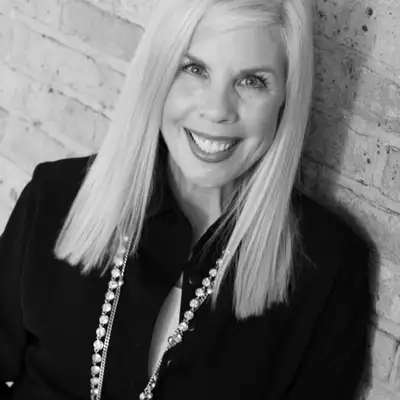
The Takeover Episode: Host of The Work of Warriors gets interviewed by her own coach, Laurie Proctor.
Kim Rapach (00:00.405)
Ahem.
Laurie (00:03.686)
Hi, welcome to the work of warriors. I'm Laurie Proctor. I am your guest podcast host today. And I'm gonna be interviewing the podcast host, Kim Rappage. So Kim, welcome to your own podcast. I'm gonna do a little introduction of you. Is that okay? Okay, so.
Kim Rapach (00:17.84)
Thank you.
I would love that, thank you.
Laurie (00:24.21)
I'm Lori. So I, I am a friend and a former coach of Kim's. So that's who I am. I'm not going to say much about myself cause it's not about me. And Kim and I were joking before I even started, um, today that I'm like the Jay Leno of her podcast. So I'm just standing in for the true genius, Johnny Carson and I'm interviewing Johnny Carson today. And so who Johnny Carson is, AKA Kim Rappage, she is a dear friend of mine.
who I've known for many years, and I've watched her through many iterations of her becoming her best, highest self. And who she is, is she is a dedicated therapist, coach, healer, helper, that has really found her calling, helping high achievers, entrepreneurs, entertainers, and people that bring creativity and goodness into the world. And she wants to change the world by helping.
helping them find mental wellness and prioritizing themselves as they continue to create goodness for the world. Kim also has a son and a husband who she is wholly dedicated to, and I've watched her walk with them through many things, because my son and her son are the same age and they vaguely know each other in school, but not too much. So we've done that journey together as we watch them become young men.
And I am just thrilled that I get the chance to interview Kim as she shares her story and her heart with her podcast people. So Kim, I'm so happy to be here and in this position where I get to turn the tables on you. And so welcome. Welcome to your own podcast. How are you doing today?
Kim Rapach (02:14.37)
I'm good. Thank you so much. This means so much to me when I felt like it's time to share a bit of my story. Can you hear my dog snoring? Okay, good.
Laurie (02:30.002)
No.
Kim Rapach (02:30.834)
Okay, okay. Okay. When I felt that I just felt inspired to share part of my story, I just felt like I don't want to do it alone. And that is part of my personality. And also, it is part of my work to ask for help.
And I thought, well, who's the safest person for me to sit across the room from than my coach? And I know you said former coach, but in my mind and in my heart, you are my life. Like you're stuck with me for life. You are my coach. Um, and I just feel really safe in your presence and I trust.
your knowing and I trust your gut and I trust your intuition and you just have always held such a safe space for me so I couldn't think of anybody I'd rather sit with as I touch into my own story again. But this time publicly.
Laurie (03:22.02)
again.
Yes, and that publicly is there's a big difference from being with your story, even within a group or with another versus publicly coming forward. And yet that's what your guests are doing. They're bringing their stories forward. And so for you to come now and bring your story forward is the work of warriors, right? And so here we are. And where would you like to begin? Like where in your story seems like a good place to start.
Kim Rapach (03:52.042)
I mean, I think just what you said, like sharing our stories and sharing them openly, it's really part of my life's work is to normalize the human experience, to normalize not trauma in itself, but to normalize the conversation around those who have experienced especially significant trauma. I think everybody has experienced trauma at some degree, but especially for people who...
have experienced some really dark things. I think we need to talk about it because we're still in this space in our culture where we're running from it.
and we're trying to hustle our way out of feeling it. I think there's two things in humans that we have in common. I mean, there's many, but two, most of us have experienced something painful and all of us are being told that we should do something, eat something, drink something, or act a certain way to not have to feel those painful emotions from those experiences. And we're all.
running around trying to not feel the pain that we've all experienced. And that's why I opened the work of warriors, because I want to have a space where we can feel seen. We can feel known without having to accomplish anything, without having to open a business, without having to write a book, without having to be on a stage. And we're going to show up and say, what have you been through? And how are you coping? How are you fighting for yourself?
because that has been what set me free, if you will, is learning how to fight for myself with love. I fought for myself my whole life, but not in healthy ways. Now I take a healthier path. And so I just think if we can build a community where we normalize that instead of shaming people for what they've been through or slapping a label on them, telling them they're mentally ill because their nervous system is dysregulated because they've had.
Kim Rapach (05:48.502)
really painful experiences. I just, I wanna normalize the humanity and what it's like to have a story, really.
Laurie (05:56.206)
Yeah, and that's such a beautiful, like I hear your beautiful calling and hope for the world and for other people to know their story and to really be able to share and feel it and not have to numb it, run from it, overcome it, achieve it away, but really be with it, with honesty and with integrity. And I have watched you do that for years, for years. And I know you have your own really.
hard story of trauma. And so is there a place in that story that you'd like to share with your listeners? Like.
Kim Rapach (06:35.182)
Yeah, I'm very comfortable with that. I, you know, sometimes it takes me, it takes my breath away a little bit. I mean, it brings up, you know, there's still parts of my story, as with all of us that are still in my body. You know, we talk about the body keeps the score, but also I get overwhelmed sometimes on the opposite end of that with like, whoa, I forget where I came from. Like I forget what I've been through.
And I don't want to lose sight of that because I'm not the last one to have a painful story. And I can look around at my life and I have immense gratitude.
and immense awe of like, Whoa, this is my life. This that's my kid. That's my husband. This is my house. And I don't live in a mansion on the hill or you know, anything like that. But I am so grateful to feel safe, to feel loved to have healthy relationships, a career I love, you know, a family we're very tight knit little threesome me and my son and my husband.
but I look back at where I've come from and I'm in awe of what I've been through, not only what I survived, but now how I feel like I'm currently thriving. And I just want people to know that that's possible. And so I think the only way to do that is to share a bit of what that process looks like. I don't sit here and say like, oh, I'm healed. And I figured it out. It's...
I am in a constant state of healing. I live my life according to values that promote my own healing and those around me. I try to learn from my mistakes. I have grace for my mistakes.
Kim Rapach (08:28.474)
But I think we can avoid this idea that like, oh, I'm healed and let me show you how to do it. That's not a stance I'm coming from. It's more, hey, healing is possible and we can thrive and we can experience love and we can experience success and we can experience all of it from a place of joy, like true authentic joy and gratitude as opposed to, look at this big belt buckle I got and still feeling miserable.
time too and I'll talk about that but you know basically as you know I grew up in a very small town about 16,000 and I grew up with you know my mom and dad were married I lived in a trailer at the end of a dirt road literally it was called dog patch dog patch road and my parents divorced when I was about six
And at the time, I remember, you know, my dad was sleeping on the couch.
And I remember he was an over-the-road truck driver. And I remember asking him, like, why are you sleeping on the couch? And he would say, well, I get home late from work. And as the story unfolded, he was actually going back, he was divorcing my mom and going back to his first wife. And I remember the worst thing my mom had said was like, he can't make up his goddamn mind. And I remember feeling shattered by that. And I think it's important that we understand that
Trauma is not how big or violent or anything that it is. It's what it does to your body, right? And I remember in that moment feeling, I'm not okay. My mom is mad at my dad.
Kim Rapach (10:21.122)
And they got divorced and they honestly did a really good job of not bringing me into it. They didn't talk about each other in front of me. They didn't put each other down. And when I became older, I realized they probably did. Just they didn't put that on me. In fact, I had written a paper in college. My teacher had said, can you write a paper about a traumatic experience? And I wrote about my parents' divorce. And it actually turned out to be so positive.
that she asked if she could use it in divorce mediation. She's like, I never hear about this. My dad and my stepdad, this was my second stepdad. So there's a piece of the story I'll come back to. But my dad and my stepdad, his name was Bob, they got along, they'd work on my car together. My parents just always got along and they were very kind. Now that sounds like, well, that's not, that's not much to write home about. But there's a middle piece to my story where there was another stepdad.
So my mom, after they got divorced, my mom got remarried. And he was a violent, abusive man and really put us through hell, both my mom and I. And I won't share my mom's story, that's her story to tell, but for me, I mean, he was sexually abusive, he was physically abusive to my mom, which I witnessed.
And probably one of the most significant things in my story that I continue to have to revisit as I continue to heal is I watched my mom have her back broken. He had thrown a briefcase at her. And I had to go to the neighbor's house and lie and say she fell down the stairs. That's really significant because it taught me at a very young age.
to not tell the truth about my suffering, right? And so I developed over my lifetime, a pattern of like, I'm fine, I'm fine, I'm fine, no matter what I was going through. And I would be internally anxious, angry, sad, I'm fine, because again, that trauma landed in my body.
Kim Rapach (12:27.598)
shoot my camera just cut out that trauma landed in my body that said just make it okay just say you're fine so that there's no further harm right i learned i knew if i told the truth we were all in trouble and so that's so significant and
Laurie (12:48.99)
Thanks for watching.
Kim Rapach (12:49.246)
Again, I think it's so important that we understand the cause, like how it lands in our body, and the patterns that we develop to survive out of those. For me, that's everything. When I understand the why, then I can do the work, then I can go back, and I can untether from that by tending to those younger parts. And then again, there was sexual abuse.
I ran, I didn't run. I grew up in a home of a bunch of Irish Catholics. So there was a lot of drinking, a lot of yelling, a lot of violence between uncles. And it was hard as a kid to know if somebody was mad at each other or if there was a football game on. It all, I remember it just, it feels blurry in that it was all very similar. And I just, I say that because that's how it was.
in my body. Like, is this real anger? Is this joking? Is it a football game? But all I know is tensions were high a lot. And so my stress levels were up even as a kid, right? And it wasn't until I was late 20s.
that I even realized I had anxiety. When I look back now, I'm like, oh my God, I was anxious my whole life. I was always on autopilot, survival. It was always a fight or flight freeze, always. And I just didn't know, because I didn't know I was surviving.
Laurie (14:21.214)
Well, and I heard what you said. Part of your coping strategy that you learned was even though you were feeling all this fear and anxiety and dysregulation in your body from the trauma that was happening to you, you had to learn to be okay, to almost like deny your own experience, your own internal experience to put on that face and say, I'm good, I'm good, I'm fine. And there is a believing in that.
right, that part of you that had that strategy that, no, I'm good, that continued to go to high school and college and get your degrees, right? Like she was okay, she was surviving. But internally, I heard the shattering, like even when your dad left and your mom made that comment, because I also heard they were really good to not do that, except in that moment, it was done. And that's what shattered.
Kim Rapach (15:16.711)
Yep.
Laurie (15:17.106)
Can you say a little bit more about that? Cause it seemed really important.
Kim Rapach (15:22.302)
Well, I remember my mom was in the bathroom and I went in and I had I think I think it was like when I Discovered that he was going back to his first wife He I think he must have told me like I'm marrying, you know Marilyn and I as a kid it was like hey mom Here's what dad said, right? And it was and she said oh my god, your father can never make up his goddamn mind And I just remember it. Like you said you call it shattering
I do remember that, like, that was like probably the first experience of lack of grounding, right? Like we all have that moment where it's like life was no longer as I knew it. And I think the younger that happens, the harder it is to make sense of, to find language for and to work through. But I think that was probably my first shattering, my first loss of grounding.
Laurie (16:16.014)
Yeah, and even in that shattering, I hear the loss of safety, the lost of certainty. And then to have a violent, sexually abusive stepfather enter the picture, that really is going to take away that little girl's sense of safety. So it makes so much sense that you're coping strategy to say you're fine and to make yourself even be fine. Like how does a little girl make herself be fine in those types of circumstances?
And yet you found a way. Can you say more about the way you found?
Kim Rapach (16:50.11)
Yeah. Well, I do think like that, that day that my mom had her back broken, I do think that I learned within every cell of my body that day. I remember her saying, go to the neighbors. It was the next day. So like she went to bed and then the next day she's like, I need you, I need your help. I need you to go to the neighbors. Don't tell them what happened. Just tell them I felt taking the dog outside.
And I remember walking down, rehearsing in my mind. She fell going down the stairs, taking the dog out. And this is what I have to say. And just marching my little, you know, probably six, seven-year-old body across the yard to the next trailer. There were three trailers at the end of the road. And knocking on the neighbor's door. And just, you know, I think probably disassociating to have to lie. And just like.
Um, my mom, like reciting the story. But as we understand trauma, like think of what, what that did for me, right? Like that's sealed in my cells, that's sealed in my body, in my brain, in my nervous system. Here's what happened. And it's not the truth. But it's what's going to keep me alive and it's what's going to protect my mom.
Laurie (18:14.642)
That's right. And it's...
Kim Rapach (18:16.07)
And so all through life, it's not, you know, in my nervous system, it's not safe to not be okay. Whether I can logically make sense of it or not.
Laurie (18:25.702)
Right, and not only that, but it's not safe to tell my truth. It's not safe to even to say how scared I am because I'm guessing not only as a little girl where you're confused, but you are probably terrified underneath the disassociation and that having to just be okay. Yeah, because you can't watch your mom get her back broken by violence and be okay with.
And yet those coping strategies, those brilliant coping strategies did help you survive that. So then what? Like what happened then after your, like how many years of the violence and the harm did you endure?
Kim Rapach (19:08.066)
Thanks.
Kim Rapach (19:11.442)
So from about age six to 12.
Laurie (19:18.142)
Those are big years.
Kim Rapach (19:21.89)
Those are big developmental years. Yeah.
Laurie (19:26.982)
Yeah, even where you're learning how to become a young woman, right? Your body's changing, your hormones are changing, everything's changing, and you're being abused. So how did that affect your heart and your body and your soul that you've come to understand?
Kim Rapach (19:33.142)
Sure, yeah.
Kim Rapach (19:46.882)
Oh, wow. I mean, there's so much from disclosing the abuse. There was so much violence that it wasn't really safe for anyone to tell the truth. And so even when I did tell the truth, the abuse stopped. But my stepdad still lived with us.
And so there is a, you know, there's a lot of, there's a lot of reasons for that, that again, I don't really want to get into because it's not part of my story to share, but I will share what's impactful for me, is that I learned it was just, it was like it just kept getting solidified. That it's just not, it's not productive, it's not helpful, it's not safe. What's the point?
And I think I just, in my developmental years, I can look back and just see how the layers of armor built layer upon layer upon layer to protect myself. Because it is hard, as an adult, it's hard to feel those feelings. But at 10 years old,
You know, and there's so much, and we could probably have a whole episode on this, but there's so much complexity with sexual abuse when that is not violent. My sexual abuse was not violent. And so it was confusing. And we don't talk enough about that in our culture either. Right? You know.
those types of abuse, we assume it's violent and scary, and it wasn't. So when I knew it wasn't right and then it stopped, there was also this weird like, okay, now there's a disconnection. And so there's a lot of confusion. And so I think another thing that I learned was to not trust myself.
Laurie (21:47.582)
Wow, that's big. Like I feel that in my body, Kim, because not only did you not trust the people around you because they weren't protecting you, but now you don't trust your own good knowing, your own body's knowing what is right and wrong for you, and even trusting your own values at that time. Like if you're not trusting yourself, like where's the center? And I do hear the nuance in the sexual abuse and that.
that is so confusing for anyone, let alone a little girl who's in her developmental stages. Yeah, and there is so much nuance there. But yeah, that's a whole nother podcast we can talk about.
Kim Rapach (22:31.698)
Yeah, but I think the point for this conversation is that traumatic experience taught me that I wasn't safe and that I didn't really know what was up or down. I didn't know what was good or bad, what was right or wrong. And there were a lot of other things that, excuse me, there were a lot of other things that conversations that would happen that would leave me confused. That were...
you know, methodical from the abuser, my stepdad, that I didn't know at the time, which just left me a bit bewildered. But now as an adult, I can look back and see how predatory that was and how conditioning it was to keep me quiet, to keep me confused. And so it is my work every damn day to trust myself.
Laurie (23:23.878)
Yeah, and can you say a little bit about how you do that? And I know we're kind of jumping ahead in your story. We're not really going linear, but there's a nugget here, I feel it. So how did you come to do that?
Kim Rapach (23:32.139)
Yeah, yeah.
Well, I mean, I have been dependent on others. So I've been very independent, right? I'm strong, I'm female, I go to college, I'm tough. But that was a protective layer. In my 20s, my teens, oh my gosh, I started drinking when I was 13. My teens and my 20s, a lot of drinking, a lot of promiscuity, a lot of I don't give an F.
because that was where I felt the safest, right? I remember being in a bar with a friend. She's still, we're still friends today. I remember just telling her like, yeah, I mean, I was sexually abused as a kid and she's like, what? And I was like, look, I know it wasn't my fault. And that was the narrative I had created. Like if it wasn't my fault, I'm fine.
Like I felt like I was doing really good work because I knew it wasn't my fault. I didn't have the shame of like, I did this. I had done enough work. I was going to school to be a therapist. And I knew like, this wasn't my fault. But at the time that was what I needed, right? But as I was also telling her, like over beer and pizza nuggets and shots and a lot of anger that came out probably later that night. Excuse me.
And so it's almost comical now. I look back like I was in a good place. No, I wasn't.
Laurie (25:05.978)
Well, you're perfectly describing the armor that you were to, right? That armor that we put on those protective parts of us that come on board keep our body safe. Even though
Kim Rapach (25:08.511)
Right, right.
Kim Rapach (25:14.175)
Yeah.
Yeah, and for a season, a very long season, I thought if I could say it out loud, I was okay. That was my point of proof that I was okay. You know, I've been spending my whole life, you know, if you imagine where I've come from, I've spent my whole life trying to get to safety, just trying to get to a place where I'm okay, where I'm safe, where I can take a breath. And so if I could just say it, it wasn't my fault, it happened, look at me. I'm going to college, I'm, you know, I'm good.
I'm okay. And I'm okay enough.
Laurie (25:48.654)
Yeah, so I'm hearing that. Yeah.
Kim Rapach (25:53.42)
For that season. Yeah
Laurie (25:54.862)
Yeah, but I hear even then the tenacity to own your story. And granted, I hear you, you're kind of owning it just up in your head. Like the body piece wasn't, it wasn't connected, but that's good owning. Like you were saying, this wasn't my fault. Like you were speaking truth. It sounds like it just didn't trickle down and heal the body. What was.
Kim Rapach (26:17.438)
Yeah, oh, there wasn't a trickle. So there was more of an explosion. But so I'm going through life and I'm going through my 20s and I'm drinking and partying and a lot of, I don't cares. I just wanna help people. That's always been in me to help people. Of course, like.
I knew what I'd been through and I knew I was okay. So other people could be okay too. But it wasn't until I met my now husband who when I started having panic attacks for the first time. I think I'd always had anxiety, but it was so much part of my wiring that I didn't even know that it wasn't healthy or that I didn't feel safe. I was so much in
fight or flight that I didn't realize how much I was suffering. And so my husband was the safest person I'd ever dated. I was 29 or 28 maybe. And we've gone on a couple of dates and I was just getting more and more anxious. And I started having panic attacks.
And I started, it was coming out sideways. And I was assuming everybody, I was afraid he was a molester, an abuser. Now mind you, I had been in abusive relationships. I'd been in two relationships with men who had beaten me, who had threatened me, who had burned my stuff. Like, unfortunately that wasn't terrifying because I was already so terrified, right?
It was when I met my husband who didn't bring violence and didn't bring drama or conflict, and he brought compassion and kindness and sweetness, I lost my mind. I did not know what to do with that.
Kim Rapach (28:19.498)
And there must be something wrong with this guy because it's in there somewhere. And I kid you not, I was in therapy. I took him to my therapist. I'm like, you have to check him because this can't be real, right? And I was, and what's funny is I thought it was, I mean, it was partly Mike, but I was also working in an environment where my boss was a narcissistic abuser. And it was entangled. It was in the field of domestic violence. How ironic.
So my nervous system, looking back now, I can see it so clearly, but I feel so much compassion for my 20-some-year-old self because I was getting hit from every angle. I was running an abuser group. I was surrounded with men who were violent. I was dating this guy who was sweet and kind, and I didn't know what was up or down and really, I think, probably had what clinically some might say a nervous breakdown.
but at minimum panic attacks.
Laurie (29:20.646)
Well, I really am hearing from that story in particular, Kim, like how your body and your mind didn't know who or what to trust. And so, right. You're not trusting yourself. You're not trusting this guy you're dating. Even though you have this boss that do you trust him? Like, I just hear the confusion, but the lack of who can I trust? And, and your system couldn't take it.
Kim Rapach (29:31.07)
Yeah, exactly. And I wasn't trusting myself. We know that.
Laurie (29:50.287)
I guess what I-
Kim Rapach (29:50.638)
And just to clarify, that abusive boss was a female, which made it even more confusing. That wasn't old enough to understand, you know.
Laurie (29:58.27)
Wow, that does.
Kim Rapach (30:01.502)
Yeah, so there was a lot going on. I was leading a group with someone who I think was borderline abusive too. It was so subtle. And so I think my nervous system knew, but I didn't have language and I didn't trust myself. And I'd already learned you can't tell your truth. And so I was in this whirlwind of trauma and internal chaos, all while just trying to build a career where I could just help people.
Laurie (30:31.93)
And yet you're talking about, like, I hear it. We're like at the crux of your story, right? We're the protagonists. We're in the arc of the story. And I'm like on the edge of my seat. So what happened? Like I hear like nervous breakdown or what I call it trauma breaking open. It's like we're the parts of us, those beautiful protective parts and those manager parts and even our firefighter parts that try to numb all the pain weren't working for you anymore. So it's like our trauma breaks open. So then what?
What happened? How did you get through that?
Kim Rapach (31:03.67)
Well, so my now husband, Mike, had given me the name of his doctor and I went to the doctor and I sat on the doctor's table and cried and said, I don't know what's wrong with me, but I feel really scared and sad. And he gave me medicine that I took, trusting, because I didn't trust myself. Of course I would trust the doctor, right?
Well, unfortunately, the doctor didn't know me and didn't know, which I didn't know either. I have a very sensitive nervous system, obviously, from what I've been through, but I didn't understand that at the time. And so he had given me, I think it was 20 milligrams of Prozac, and I started climbing the walls. I got really manic. I started talking really loud. I was angry.
I was more anxious than I was before. I went from being sad to really anxious and really pent up and irritable and terrified. Like I was, I remember just feeling so terrified and almost like I was stuck in this movie of like, can't anyone see what is happening to me? And it was the same friend that I mentioned in the bar who I had told my story to. We were still friends and she had said,
The one thing that's changed is you started taking this medication. I think you need to stop." And I was like, oh. I was so not attuned to myself, that didn't even cross my mind. It never dawned on me that I had put a chemical in my body, in my dysregulated body, that I was sensitive to. And so she said, you know, because I had asked her, like, do I need to go to the hospital? Am I crazy? Am I? What is happening? I'm going to lose my mind.
I'm so scared. She came over at like 10 o'clock at night to my apartment. Like I still, you look back at people who saved your life, like she was one of them for sure, as are you. But she said, I think you need to stop. She was a therapist as well. She was a social worker. Stop the medication, find a therapist. And even then, like now it's like, well, of course, but even then it was like, what? I need therapy. Why would I need therapy? I'm fine.
Kim Rapach (33:19.178)
like spent 28 years mastering the art of being fine. I was anything but fine. And so I did, I called a couple therapists and there was one that I connected with and her name was Linda and I will forever be indebted and grateful for her. And she was the one who helped me realize that it wasn't solely Mike that was triggering me. And she pointed out like seven different things were going on in my life.
She's like, I see it here, I see it here, I see it here. And I was just like, wow. I just hadn't, I didn't have the skills to do that on my own. And so I loved therapy, I loved working with her. And she was the one who walked me through what to say to my doctor. And she was the one who helped me understand that I was sensitive to medication and sent me back to the doctor. And she literally told me.
tell him you are sensitive to medication, you cannot take Prozac. You need something lighter like Lexapro, the lowest dose, but what he's going to try to do is he's going to try to tell you that you're bipolar because you had this reaction to medication. I don't think that's it.
And I kid you not, I went to my doctor and I said, I have a therapist, here's what she said. And he said, well, typically when this happens, people, they're bipolar. So I'd really feel more comfortable putting you on an anti-psychotic. And that was probably the first time where I was like, no. I still wasn't trusting myself, but I was trusting Linda, which for that season, it was fine. It was good enough. But I said, no, I'm not.
I'm not taking it. I want Lexapro. I was like, script, I want Lexapro 10 milligrams, please. That's all I want. And I was so scared to even speak up. And he's like, okay, but I'm just telling you, this is typically what this means. He wasn't a psychiatrist. He was a general practitioner. And so he didn't know my body. He didn't know, I didn't even live in the town. Like I was Mike's doctor, right? And so.
Kim Rapach (35:24.334)
You know, when I look back now, like, wow, all the voices I let chime in, I look back like, okay, this is why I trusted that one because it's how it felt in my body. Here's why I didn't trust this. And it's been a lifelong journey of paying attention now to who I can trust and who I can't. So, you know, I went through, you know, changes of medication and I did take Mike to my therapist, Linda, and had her, you know, Ouija board him or something. I don't know.
Laurie (35:40.878)
Mm.
Kim Rapach (35:54.606)
It's like, I don't know, it seems great, but I'm sure I can't trust that. There's gotta be something. And so that really helped. And I needed that, right? Like, I needed that at that time. I needed, if you will, even though I was an adult, I was still a child. My younger parts were very forward. I needed a safe adult to say, he's good. This is how it's supposed to be. And yeah, and it was. And so I got to...
I got to breathe and start learning, like, okay, how do I do a healthy relationship? And I fumbled it hard for a long time.
Laurie (36:33.522)
Well, I hear the relearning, even the relearning to trust trustworthy people, because you didn't learn that in those developmental years when we are to learn that. And so I hear even you trusting Linda was a really gigantic developmental step for you because you can't, we can't trust ourselves till we trust that figure, you know, that nurturing figure that we need to be trustworthy. And she filled that role.
Kim Rapach (36:36.586)
Yeah.
Kim Rapach (37:00.542)
Yeah, she filled that role. Yeah.
Laurie (37:03.726)
And so when did you begin to trust yourself more? Like was there a moment in time during your healing? Because I heard that's a big one where you now can trust someone else.
Kim Rapach (37:18.87)
So I think I was beginning to trust other people. I don't think I learned to trust myself truly until probably another 15 years later. I mean, I had to get my grounding with who's gonna protect me and who's not. But what comes with that is then a dependency, right? Okay, well now I need other people.
to make me feel safe. So now I don't make my own decisions. What do you think? You know, even like having this podcast with you today, I had to run through that filter of, is this me being dependent and not trusting myself to share my story by myself? Or is this me legitimately knowing and trusting I need care and safety in this process? I didn't just be like, hey, let's do this. I had to run that through the filter.
that I've run most decisions through. And I do have a very protective husband who would take care of everything and all the things if I let him. And we had to learn that together because I was leaning too hard into him, which puts him in an unrealistic position.
to have to be my parent and my, you know, my protector too much if I'm not doing that for myself. So I will receive my husband's care and protection after I also provide that for myself. Does that make sense?
Laurie (38:58.67)
It makes total sense, but you had to learn to provide that for yourself. And it took some time is what I'm hearing. It's part of the journey. Yes.
Kim Rapach (39:05.726)
Yeah, yeah, one of the most profound things that I've done, like I've done therapy, I've been reading, I've been doing personal development. You know, even as a therapist, I was like, you know, I have to take care of myself, I have to, you know, take off the list of, you know, things I need to be doing. But it was actually the group, the story group that I did with you through So That, through your coaching practice, that I sat in a group full of people and...
not only shared my story, I don't know if you remember, but it was like, who wants to go first? And I was like, me, I'll just rip off the band-aid because I need to get to that place where I'm okay. I'll be the first to go. And it'll all help all of you too, so it'll make me feel good about myself. I didn't know any of that was happening at the time. But that turned out to be so powerful because not only did I share my story and get met with so much compassion and care and concern and love and healing,
I also got to provide that for other people. And just through the natural process of relationships, I just got to learn, like I felt like I was starting to come alive really within my nervous system in a more authentic, honest way, even when it was painful, if that makes sense.
Laurie (40:23.87)
It does make sense and it is painful, right? Because we're having to feel what we didn't feel previously because when we sit and retell our story in a safe place, we are actually getting a redo, but as part of the redo, you have to be in the feelings again. So I do remember you telling your story and the fear and the, just the unsafety in it, but then being met with safety, being met with concern.
for that little one in the story, there is something that rewires our nervous system. And I don't understand it all. I mean, I kind of do, but I wouldn't be able to explain it well, but there is something in the redo that rewires our nervous system. That's the beauty of neuroplasticity. And so I love hearing that was part of the healing because I am a big believer in the other, in needing the other. We're just defined that way.
Kim Rapach (41:09.76)
Yeah.
Kim Rapach (41:18.794)
Yeah, yeah, and I...
Laurie (41:21.134)
Not sure why, but we are. We do need the other.
Kim Rapach (41:22.878)
Yeah, I believe that. I mean, yeah, that's why we do what we do, right? And I learned through that group and just, it took me, I think after that group, I shared my most significant story of my trauma. And it wasn't until 18 months after I finished that group that I then read that same story to my husband. 18 months.
It took that long to be able to say that out loud. And I really think like, as I'm thinking about it now, I needed to trust myself that if he didn't have the reaction that I needed from him, that I would still be okay and not manufactured okay. That I would be authentically, truly, genuinely safe.
and that I could care well for myself. And so I think that was a breaking, why my camera does that? I think that was like a breaking, like an untethering from I need someone else to be okay with my story.
Right, and so I mean 18 months of processing that eight week group. So this isn't an overnight, you know, fix. It's a lifestyle, it's a practice. It's going back to that messaging. I knew, I learned in that group with that little girl that younger version of me needed, and it became my everyday to run everything through that voice. I got you, you're safe. Never gonna happen again.
We want people in our lives, we thrive in authentic connection, but you don't need it for survival.
Laurie (43:16.306)
That feels so big. Like what you're saying right now, those 18 months, because I'm imagining like how much safety that little girl needed to be okay if her husband, her beloved, didn't handle it well, where she would still be okay in your care, in Kim's care, right? Because an 18 months, like I have chills just thinking about that. I didn't know that part of your story, Kim, that you waited 18 months to tell them.
But that, what I'm hearing is those 18 months gave your inner child, that's what we call her, right? That beautiful little girl that suffered so greatly, time to attach to you, to your highest, wisest self. So that even if Mike would have been totally flubbed it and in his own disassociation or fear would have not handled you well, she still would have been okay. So how did it go?
Kim Rapach (44:13.398)
Yeah, and I don't think I knew that until right now in this conversation. I just, I mean, that's just what I'm realizing is I needed to know within me that I would genuinely be okay because I had developed this dependency on other people, you know, whether it be them telling me I was good enough or that, you know, I was enough or taking care of other people so that I felt like I was enough. I was, I made a whole career out of it.
Laurie (44:17.987)
Oh, tell me, what did you...
Kim Rapach (44:44.01)
But that was a pivotal point. I'm realizing that, and this is so important too. It's just like, it's layer by layer by layer, right? Our healing is layered. Like this conversation is healing. It's healing yet another layer. And I just, I welcome it. But I'm realizing like, I was really needing to make sure like if he said something stupid or harmful that I was going to be able to protect myself from a place of genuine love and compassion.
Because my whole life I had been armored up and I could throw down. That was the easy part. I didn't want to do life like that anymore.
Laurie (45:22.778)
Wow, that's really amazing. And so when you did tell him, how did it go?
Kim Rapach (45:28.762)
Oh gosh, this might make me cry. So I was terrified. And I read this letter that I had written in my group, in my story group 18 months before, I never changed a word, just pulled it back out and said, I think it's time. Excuse me. And we were laying in our bed, we'd already had breakfast or whatever, and I said, can we just, I felt safe there, climbed back in bed, read this to him.
and he was quiet, which was probably eight seconds, but felt like 45 minutes. And it wasn't even like, when I look back, it's like, oh God, please say the right thing. Just because I just want us both to heal. Like I need you to see me. And if you don't, it's okay, but what am I gonna say if you don't? And you know me, I tend to.
overthink things. But he paused and I remember he was just like...
I feel really angry that happened to you. Makes me wanna do something about it.
But I know all I can do is love you.
Laurie (46:48.795)
Okay, you're gonna make me cry.
Kim Rapach (46:55.778)
Can you help me?
Laurie (46:55.967)
And what was, yeah, what was that like to hear?
Kim Rapach (46:59.502)
Oh my, I mean, these are the things that like, these are the things that truly heal us. It's not a pill. It's not a beer. It's not a job. It's not a stage. It's these moments that heal our trauma. When someone can be safe and be with you in it and see you and not change your narrative, not, you know, hand you a tissue, like just hold you.
Laurie (47:29.806)
Yeah, and you know what? Yeah, and what I just need to name this, because what I heard in his response that brought tears to my eyes is advocacy. Like he was angry, but yet centered and grounded. Like he, because he could have been dysregulated in his anger, which probably would have not felt safe to your body, but he stayed safe. It's so important. He stayed safe even in his anger on your behalf.
Kim Rapach (47:30.171)
and have their authentic response.
Kim Rapach (47:50.846)
Right, right, that's so important.
Laurie (47:58.81)
which there's something that feels so healing when someone is that advocate on our behalf, but grounded present advocacy, not like, I can't believe that happened to you, right? Cause that would have just stirred it up more.
Kim Rapach (48:12.648)
Yeah, and I would have honestly felt the need to protect him. Even though I was in the business of like taking care of myself, I just know because I probably wouldn't have felt safe. I would have just jumped to his rescue.
Laurie (48:24.99)
That's right. But because he was safe and grounded in his anger, right? So he was speaking on behalf of those parts of him. So he was in self-energy. That's what we call it in my IFF modality. But then he offered love and connection. Well, not only was there advocacy and protection in his anger and grounded anger, but then there was love. And I got you. I'm going to I'm going to love you through this.
Like it brings tears.
Kim Rapach (48:57.214)
Well, and I will tell you probably know this story, but and this is jumping ahead because this wasn't all that long ago, maybe five years ago, I don't even know. But I've been doing this work, this inner work just again layer by layer by layer over the years. I've always just gotten really dysregulated really fast. I get overstimulated easily, I get overwhelmed easily, and it comes out.
in anger, in dysregulation. And, you know, there comes a point where like, you know, I was a therapist, I've been doing this work for a long time, and you just get tired of it, right? You're just like, I'm so tired. And I think it was with working with you, it was either that or another group that we had done. But I know it was somewhere in this work that I've done with you, where I identified what do I need when I feel scared? Because that overwhelm is I don't feel safe.
All the cupboards can be open and the kitchen is a mess. It's not like I need things to be perfect. It's the chaos that my nervous system doesn't know how to read that says danger. So I'm like, and it comes out sideways. So through doing work in one modality or another, I had a conversation with Mike in a point of calm.
and just, and like, I still see where I'm still getting dysregulated. I've done a lot of work. I've healed a lot of my trauma and I'm still struggling. And here's what I think I need. When you see me get overwhelmed or dysregulated, what I need for you to do is put your hands on my shoulders. And he's a big guy.
and put your hands on my shoulders, look me in the eyes, and tell me I'm safe. Because even if it's about laundry, it's just so old that like, I just don't feel safe. And I just need your help. He's like, absolutely, I can do that. And I was like, thank you. And it was just such a powerful conversation. And I felt like, oh my God, we're amazing, you know.
Kim Rapach (51:11.754)
Well, I had forgotten that I had asked him for that until there was a point where I got dysregulated. And it was over laundry in the laundry room. And it was like, I don't even know what it was about. And he was like, whoa, honey. And he takes, he did exactly what I asked. And he put his big strong hands on my shoulders, looked me in the eyes. He's like, you're safe. I got you.
Kim Rapach (51:39.886)
It changed my life.
Laurie (51:43.486)
And I see even as you retell it, it still has the same effect on you.
Kim Rapach (51:49.503)
It's so healing.
And it's so needed. Like I needed that my whole life, right? I needed that when I was two and four and six and 10 and 12 and 20. And I'm so grateful now, but it really did heal a part of my brain. Do I still get dysregulated? Yeah, I do. It's not as often and it's not as big and is not as explosive and I recover much quicker.
because my nervous system is healing to know I really am safe, but I'm not just knowing it, I'm feeling it.
Laurie (52:29.418)
little one in you who had to learn to live in chaos and you know just horror now feels safe within you and that's stunning I mean that is truly healing and she's still there but she's now safer right that's the thing our triggers are always those invitations for healing and I really hear how she has healed
Kim Rapach (52:48.286)
Yeah.
Laurie (52:58.726)
and become a warrior.
It's really beautiful, Kim. Is there anything else you want to share about your story or how then you made this work towards this niche you find yourself in? Like, I don't want to leave you there, but I do want to make this jump to, like, this work of warriors, right, and how your calling came out of your own healing.
Kim Rapach (53:19.274)
Yeah.
Kim Rapach (53:23.83)
Yeah. So I'm gonna hit pause for a second just because I need to blow my nose.
Laurie (53:29.574)
And I'm sorry I made that jump but I also do want to If you want to linger there longer we can I just I also know how long you want it to be
Kim Rapach (53:31.634)
Oh no, I think it's perfect. I do. I think it's perfect. But I'm gonna mute myself.
No, I think that's a great... I think that's a great segue.
Laurie (53:45.874)
That is so huge. Oh, I love that story.
Kim Rapach (53:49.417)
This is my favorite story. And there's so many good stories, but that is like the biggest. And it's, you know, it's what we give to our clients, right?
Laurie (54:02.298)
Yeah. And that's why I kind of wanted to make that move. Like how, how do you then want to give this to your clients and, and why high achievers? Well, why is because you are one. Yeah. Strategies. You get those coping strategies, those high achievement coping strategies.
Kim Rapach (54:12.349)
Yeah.
Kim Rapach (54:19.918)
What's up?
Kim Rapach (54:25.374)
Yeah, okay. So what did you ask me? This tissue box like just falls apart. Look, what is that? Box of Kleenex. I may have to vacuum.
Laurie (54:36.155)
Oh my gosh, what is that?
Laurie (54:40.306)
And I don't even know what I did ask you though. Sorry. Do you want me to ask it again?
Kim Rapach (54:44.726)
You said, I think you just said, how did it, how did you come? Yeah, you can ask me again. Gosh, that's gross. Sorry. Okay.
Laurie (55:04.83)
Yeah, I'm like, I don't even know how to say it again. I don't know how to enter back in. Should I just ask the question? Can you like cut it? So it would just be me asking the question.
Kim Rapach (55:13.034)
Yeah, and I think you already asked, right? I think I just said, yeah. And then I said, but I'm going to pause. So I think we're good with the question. I think it was, how did you come to the work? You said that you're a warrior. How did you come to that? So I think I'll just do.
Laurie (55:28.466)
yet to like this particular, you know, your particular niche and calling right now. And maybe you could even go from when you changed to therapist to coach or.
Kim Rapach (55:37.566)
Yeah, that's what I was going to touch on. Yeah. Yeah, OK. So yeah, I was a therapist and had a successful private practice that I had for 10 years. And I absolutely loved it. I prided myself on
the fact that not only that I was a therapist, but I loved it and also I felt really good about the work that I was doing in my own story because I believe you cannot take people any further than you've gone yourself as a caregiver.
And so it was very important to me to be in integrity, to be doing my work, to be healing. And a lot of things I was doing, from doing my inner work to learning about the Enneagram, which is a whole nother, go a whole nother episode on that, understanding trauma. My husband and I paid off all of our consumer debt.
And so finances are very important to me. And I was starting to bring all these things to my practice. And I started to notice who I felt more drawn to as far as when I looked at my schedule. And when I started my practice, if I had somebody as a client who was a business owner, say.
or even before I had my practice, I thought if you had your own business, I was so naive. I'm like, okay, they're really smart, really rich, and don't really have to work very hard. Like, I really thought that. And so, and as a therapist, and I would have like successful entrepreneurs as clients, I realized, and then, hello, I had a business, and I realized, wait a second, I'm not even paying myself.
Kim Rapach (57:24.346)
I'm the first one here. Oh wait. I'm the only one here and the last one to leave. Oh, yeah I'm the only one here and You know, it's like holy cow. This is a lot of work. I gotta do all the things right? I'm not just a therapist I have to pay the taxes. I have to pay the bills. I have to balance the ledgers I have to make all the phone calls. I have to manage my own emotions. This is a lot of work
And so I started to develop this, I think, just natural compassion for my entrepreneurs and my high achievers. And, you know,
in that process. So I had a successful practice. I went through a lot of my own healing, a lot of disruptions. I had people who worked for me. That was super challenging. I look back now, like that, you know, I had a lot to learn. It's hard, you know, doing business with other people, especially in this field, because we're all bumping into each other's stories, right? It's just truth at the end of the day. But I loved being a therapist.
But I had experienced a therapist's worst nightmare. And I had lost a client that I adored. And you just don't really, I like any grief, you don't get over it. You learn to live with it. And you learn to reflect on it. You learn to take care of yourself. You learn to do life. Just.
in truth of what is. And it was really probably when COVID hit that I realized, because during COVID, I had to shut my practice and I was still able to work. So I was very fortunate, unlike a lot of my clients who are artists and athletes, it crushed them. It didn't crush me. I was thriving.
Kim Rapach (59:17.91)
But what I was doing, like most therapists I think, but I only speak for myself, is I was seeing client after client back to back to back to back on a screen, which initially was like, wow, we can still provide care. This is amazing. But in a short amount of time for me, now, you know, take into account my entire backstory, I am caring for all the people. And I am, do, I am.
I'm not taking care of myself in the way of processing what COVID felt like for me and what I was afraid of and what I didn't agree with and what I did agree with. And then George Floyd died and then everybody had different opinions and thoughts and vocalizations about that. And so imagine going from screen, well, I know you don't have to imagine you did it too, but screen to screen to screen from every opinion that you could possibly have, it was like whiplash.
hour after hour and I was working too many hours because now suddenly everybody needed more care. Right? And so now my schedule was full on a screen in my bedroom. I had a teenager who was, you know, ending eighth grade and starting high school in a pandemic on a computer that I was so concerned about. And my husband worked in the medical field. So we just weren't as connected. Right? It's like we were all in our own rooms during that really weird time.
And I remember I had a client who was mad that I had sent them a bill for what their insurance didn't cover because it was a pandemic. So some people just think therapists don't need to be paid. We don't need to feed our families. And then people just having different opinions, there were personal things in personal family relationships that were falling apart with other family members and just watching everything unfold.
And then I had a friend, it was just, it was like that tip of the iceberg. I had a friend say something that set me off and I literally hit the darkest season of my life. It was like, I was like that typical kind of codependent, like I'm caring for everybody. And nobody gives two shits about me, which wasn't true, but boy did it feel like it at the time. And I look back now, it was an invitation.
Kim Rapach (01:01:38.934)
But before I could see that, I don't know. I think I was frustrated with my friend group. I was burned out with work. And then it must have been probably Mike and I had a falling out. And let me tell you, I will admit this. When I am in disruption with my son and my husband, those are the scariest places for me, because they are.
They're my life and I have to work every day to I'm okay. You're like really to take care of myself, but I think we had a disruption and I remember feeling the darkest I'd ever felt. So full transparency and I still have to work on this. But when I am so dysregulated, especially when it comes to my son and my husband,
I believe in my darkest moments, in my darkest nights, I believe that they would be better off without me. And I hit that point. It's 2020, 2021. I don't even know. I think it was 2020.
And I remember feeling and praying. Like I just, I was laying in bed. I was so dysregulated. My heart was beating so fast and I was just praying for a heart attack. I was like, everybody would be better off if I just died. And then the scariest part was like, I'm not dying.
Do I need to do it?
Kim Rapach (01:03:13.662)
And that was the closest I'd ever been with really considering taking my own life. Fortunately, for reasons unbeknownst to me, I just, I knew, I remember having a conversation with Mike and I remember being very direct. I had really strong boundaries and I was like, I'm gonna take care of myself and you can either come with me or not.
And I kind of had that stance with everybody. Like, I have to live my life and I have to stay alive. And not for you, for me. Not for my clients, for me. And it was just this like, wake up call of like, I have to fight for myself.
And it can't depend on this guy or that guy or her or my coach or my job or my career. Like I have to be willing to burn it all down if that's what it takes. And that was terrifying. The thought that I could lose my family, I could lose everything. But I knew and that you want to say, like, when did you learn to trust yourself? That was another big one. Like, I know my worth. I know my goodness.
I know I can't hold all these stories for all of my clients, all my family members. And I've got to learn how to truly genuinely take care of myself and fight for myself. And I had to fight like hell. And I literally, it was COVID, nothing was open. I remember going to a hill in the town over and just climbing the hill, crying and just going, I've got to get back to myself.
And no more will I sacrifice myself for anyone else. No client, no job, no status, no career, no family member, not even my own child, within reason, you know what I mean? Like, I have to take care of myself. Otherwise, I'm going to die. And I have been fighting for myself in healthy ways ever since.
Kim Rapach (01:05:25.034)
I hired a fitness coach, I learned about macros and what my workout should look like and learned to love. I'd been consistent with the gym. I got myself consistent, but I needed somebody to show me what I should actually be doing for my own body. And I feel really strong. I let go of this idea that I have to be thin. I was fighting a lot of that all the time. My worth was better when I was thinner. And now I'm like, no, my worth is better. I bring better worth to the world when I'm stronger.
And so a lot of self, like inner transformation happened. And again, I have to, I literally still just have to force myself to be intentional to pause. You know, is this for me? Is this a hell yes? Or is this a, I gotta pass? Or is it a hell no? I didn't know how to do that before. And so it's been a journey and it's...
It saved my life. And again, if I can stand here and look back and like, I survived a lot. But now I'm thriving.
And it hurts my heart still when I see someone who's dysregulated, when I see somebody who's acting out, I have compassion and I also have boundaries and I know it's not mine to fix. And so I, you know, with my career, what I had to do is I had to leave the medical model of therapy. It is, in my opinion, it is not structured.
to care well for clients or clinicians. It is structured around a system where clinicians have to nearly burn out to be able to make a decent living. Unrealistic expectations with, you know, huge ramifications if you sidestep. And in order to be able to create the life that I wanted, I just found it wasn't possible anymore.
Kim Rapach (01:07:24.49)
And I was really loving the Enneagram and the financial coaching and wanting to make a shift and looking at my clients during the pandemic, the ones who are thriving, they were the artists and the entertainers. They were figuring it out with, honestly, tools I'd given them.
Kim Rapach (01:07:43.118)
So I'm like, I think it was in a coaching session with you and you asked me to list the traits of my ideal client. And I listed them. And I was like, they love themselves, they have integrity, they work hard, they wanna change the world. They're willing to not sacrifice their own mental health. And you're like, Kim, you just described yourself. I was like, oh, okay. Well, I wanna do that. Those are the people I wanna work with.
Laurie (01:08:12.346)
I remember that. I loved that moment because that's that moment of insight, right, of breakthrough. And I heard it came from a rock bottom place. Like you hit another rock bottom. And I think that's important to mention because you had a rock bottom before that rock bottom. And I think in our journeys, we tend to have a couple, sometimes more than one, but it's...
Kim Rapach (01:08:28.139)
Yeah.
Kim Rapach (01:08:32.134)
Yeah. Henry Amar says, new level, new devil. It rings true. It's like, we're not going to heal and then go about our lives. Build a life that is centered around your wellness. And it's a lifestyle. And you're going to heal in layers. You're going to go back and hit other rock bottoms. And if you can see those as invitations, then you catapult even further on your healing journey.
And also embrace that, you know, life still happens and it's not personal. That's probably been huge for me. I spent a lot of years feeling like when bad things happened, it was like, why me? Why me? You know, and now I'm just like, well, of course it's, this is a hard life. This is a hard world to live in. Of course.
I think I shared with you before we started the podcast that, you know, my, my mantra right now is I have gratitude for everything that is going well for me, my community and my world, and I have resiliency for everything that's not. And that's just what helps me, you know, not want to, you know, go to war, whether it be within my family or across the world, but to be able to, how can I make a difference? And always that difference starts with me taking care of myself.
Laurie (01:09:49.15)
That is so beautiful and such deep wisdom. Like I hope your listeners can really hear the deep wisdom and your story and how these deep nuggets of wisdom had come out of your own suffering. I mean, even in your own brush with suicide, right? With thinking about taking your own life, that as horrific as that is in that suffering, it was the rock bottom that propelled you to say hell no.
I'm gonna choose this one. I'm gonna do whatever it takes to keep her well because she's worth it. And I'm so grateful that you did and all the people that you're now helping, all the warriors that you're helping because of that brave choice. So, was there anything else you wanna add?
Kim Rapach (01:10:34.958)
Thank you.
Kim Rapach (01:10:39.486)
I don't, I mean, I don't think so other than, you know, just wanting people to know that, wow, you know, we do this work of healing, so that hopefully future generations have less adversity, right. So I don't want to normalize like, oh, you've experienced adversity, that's totally normal. Like, I don't, I don't want to give it that credit. Like I want to build a world where we it's not that common.
That's, I would love that where it's not like, oh my gosh, that happened to you, like where it's shocking. It's unfortunately not shocking, but we need to make it. So, you know, can we leave the trauma to car accidents and illness and not us doing it to each other, right? Like that's the world that I want to build. I want to, I want it, you asked me one time, what is your BHAG goal? What's your big hairy audacious goal?
And it, you know, and I said like to end celebrity suicide, like I dream of a day where I get a phone call where someone says, you know what, because of the work of you and all the other warriors, we haven't had a celebrity suicide in five years, 10 years, it's been 20 years. Because when we can do it on a grand level, then it impacts the rest of us.
We are inundated with social media and the entertainment industry, and we need our art as well.
Because I think one of the biggest struggles, I think sometimes is when we're duped into this idea that if you're successful, if you're famous, if you have all the followers and all the money and blah, whatever the success is, that you'll be happy. And that's, I think, where we lose people. Because they, because they work and are artists, they work and work and they do everything everyone has told them to do, healthy or not.
Kim Rapach (01:12:37.342)
And they achieve the things. And they find out they feel exactly the same, if not worse. And that is just such a crux from is that the right word crux? What's the word? It's just such a pain point for me like it pisses me off.
Laurie (01:12:53.95)
Well, it's a tragedy in and of itself, right? It's, yeah.
Kim Rapach (01:12:56.299)
Yeah.
It's just, it's such a tragedy. It's like we're leading people with this false narrative and this lie, and then they do the thing and then they're there and they've lost more than they've gained. And then we have the rest of the world going, oh my God, they made it. Look at that. They're so lucky. Right, and I think that's where we lose people. I think it was Rick Rubin that said, if you chase a dream for 20 years, you finally achieve it and find out you're still the same, that's where you lose hope.
And so I want to give people hope at the beginning of the journey to take with them as they climb their success. So that when it comes and goes, they're still resilient. They're still full of joy. They're still, of course, it's hard to be human and they don't take it so personal. And their worth isn't built on what a bunch of strangers have to say about them.
Laurie (01:13:55.198)
It's a beautiful vision.
Kim Rapach (01:13:57.006)
Thank you.
Laurie (01:13:58.654)
Thank you.
Kim Rapach (01:14:01.046)
Thank you for sitting in this space with me and, you know, you and I talked, like we didn't, we haven't even talked. Like, I just texted you and asked you if you'd do this and I was like, I don't want a script. I don't want to, I don't have any notes, you know, like this is what I got. I got no notes. I thought I might want to take some, but I didn't. And you said, I don't know what I'm going to say either. And I just know you and I are so aligned that we can trust that process. And I knew again, I knew that I could feel safe.
And I knew that I needed that. It's really hard to get out for me, maybe not some of my clients, but it's really hard for me to get on camera and just talk. I thrive. I still thrive in authentic connection. And so it's easier for me if someone is fielding some questions or at least kind of steering the ship. And so.
You know, again, I had to ask myself, like, is this a dependency thing, or is this a legitimate safety thing and connection? And I just knew it was connection. And I just, I feel like I healed even more today. So if you want to put an invoice in the mail to me, that's totally fine. LFA, whatever, whatever you want, because it's absolutely worth it, because literally working with you, like I can look back at things that have changed my life and saved my life. And they are Linda, my first therapist.
my husband Mike, you and the story groups. And it's, you know, none of it has been anybody doing this work for me, but it has been strong leadership, safe leadership, you know, accountability, attunement to me, being aware of what I was feeling when I couldn't even name it and just wisdom.
and just that safe container to mirror back to me what was true. And it's through the work with you and so that, that I really learned that it was my life's mission and through our work with the Enneagram, that it is my work to trust myself. And so while I misstep from time to time, I do, I trust myself. And I thank you for that. I thank you for leading this conversation today. I appreciate it and I love you.
Laurie (01:16:20.466)
love you too. Thank you for having me. It's been fun being your Jay Leno. And probably some of your younger listeners will be like, Who is Jay Leno? Who's who is Johnny Carson? But it just made me chuckle.
Kim Rapach (01:16:31.958)
That's so funny. That's cute. I love it. Thank you so much. I do love and adore you. I'm so grateful.
Laurie (01:16:39.538)
And I love and adore you. Thanks, Kim.
Kim Rapach (01:16:43.042)
Can you hear my dog's story now? No? Okay, good.
Laurie (01:16:46.639)
I can't.
You were amazing.
Kim Rapach (01:16:51.542)
Thank you. I'm going to stop recording, but I'm not going to hang up.
Laurie (01:16:54.62)
Okay.
Kim Rapach (01:16:56.286)
Okay.
Creators and Guests